Where to stay
Where to Stay in Edinburgh: 4 Best Areas Compared
Compare Edinburgh’s most useful hotel areas by sights, hills, transport, evening atmosphere, relative price and the compromises each location brings.
Last reviewed
Quick answer
For a first visit to Edinburgh, stay in the Old Town for the Royal Mile and historic sights, or the New Town for a more orderly central base with shops, restaurants and easier north–south connections. Choose the West End or Haymarket for airport-tram and rail convenience. Pick Leith for waterfront dining and a neighbourhood stay, or the Southside when the university, festival venues and Holyrood Park matter more than being beside Princes Street.
This is an editorially researched area-selection guide, not a claim of first-hand residence or hotel stays. The ten hotels are examples that demonstrate different Edinburgh bases; they are not ranked again here.
At a glance
Compare the best areas to stay in Edinburgh
No Edinburgh area wins every trip. The Old Town puts history and many festival venues closest but brings slopes, steps, cobbles and busy evenings. The New Town is the strongest central all-rounder for dining, shopping and transport. West End and Haymarket simplify airport and rail arrivals. Leith and the Southside trade doorstep landmark access for a more distinctive local or retreat-like stay.
| Area | Best for | Feel and evenings | Transport | Positioning | Main trade-off |
|---|---|---|---|---|---|
| Old Town and the Royal Mile | first visits, history, short sightseeing breaks and many August venues | Historic, dramatic and visitor-facing, with closes, wynds, stone buildings and major sights concentrated along a steep ridge.Atmospheric after dark, with pubs, restaurants, tours and performance venues; the busiest streets can stay active late during festivals and weekends. | Waverley serves the eastern side of the Old Town, but the last section may involve a climb, steps or cobbles. Match the hotel to the station exit and street level. | Mixed overall, but distinctive rooms near the Castle and Royal Mile often carry a central-location premium. | The most evocative base is also the least forgiving for luggage, reduced mobility, taxis and anyone expecting flat, quiet streets. |
| New Town and the central city | first-time all-rounders, shopping, restaurants, couples and central tram access | Georgian, polished and central, combining formal squares with shopping streets, galleries, restaurants and bars.Lively around George Street, Rose Street and St Andrew Square, but generally less enclosed and medieval-feeling than the Old Town. | Waverley and the St Andrew Square tram stop serve the eastern side; Princes Street tram stops and city buses help across the wider grid. | Predominantly upper-mid-range and luxury among this guide’s examples, with premiums for Castle views and landmark addresses. | “New Town” covers a broad grid: a hotel near St Andrew Square and one near Charlotte Square create different walks to Waverley and the Royal Mile. |
| West End and Haymarket | airport arrivals, rail trips, business stays, Murrayfield events and travellers with luggage | A practical western gateway that shifts from grand Princes Street hotels and Georgian terraces to the busier station streets around Haymarket.Quieter in some Georgian streets, livelier around pubs and the station; room orientation still matters on main roads. | Haymarket station, the airport tram and frequent buses are the main advantage. The farther west the hotel, the more often Old Town plans need a tram, bus or longer walk. | Mixed upper-mid-range to luxury, with both landmark full-service hotels and contemporary compact rooms. | Excellent arrival logistics do not equal doorstep Old Town access; compare the one easy airport journey with the journeys repeated every day. |
| Leith waterfront or Southside parkland | repeat visitors, destination dining, neighbourhood stays, university trips and travellers prioritising the hotel itself | Two deliberately different alternatives: Leith is a historic port and dining neighbourhood; the Southside mixes university life, venues, tenements and green-space access.Leith has a strong restaurant-and-bar identity around the Shore. Southside varies from student energy near the university to much quieter parkland settings. | The tram connects central Edinburgh with Leith and Newhaven. Southside journeys rely more on walking, buses or taxis; Prestonfield sits farther into parkland than the university quarter. | Broad and highly property-dependent: the examples here are destination hotels, not evidence that either district is uniformly expensive. | Neither choice is a default landmark base. Confirm the final connection after dinner or a late performance, and do not treat Leith and Southside as one physical area. |
Area by area
Which Edinburgh base fits your trip?
Use the examples to understand each area’s hotel range; they are not a second ranking.
Best for first visits, history, short sightseeing breaks and many August venues
Old Town and the Royal Mile
Historic, dramatic and visitor-facing, with closes, wynds, stone buildings and major sights concentrated along a steep ridge.
- Nearby focus
- Edinburgh Castle, the Royal Mile, St Giles’ Cathedral, National Museum of Scotland, Grassmarket and the Palace of Holyroodhouse.
- Arrival and transport
- Waverley serves the eastern side of the Old Town, but the last section may involve a climb, steps or cobbles. Match the hotel to the station exit and street level.
- After dark
- Atmospheric after dark, with pubs, restaurants, tours and performance venues; the busiest streets can stay active late during festivals and weekends.
- Price position
- Mixed overall, but distinctive rooms near the Castle and Royal Mile often carry a central-location premium.
- The trade-off
- The most evocative base is also the least forgiving for luggage, reduced mobility, taxis and anyone expecting flat, quiet streets.
Hotel examples
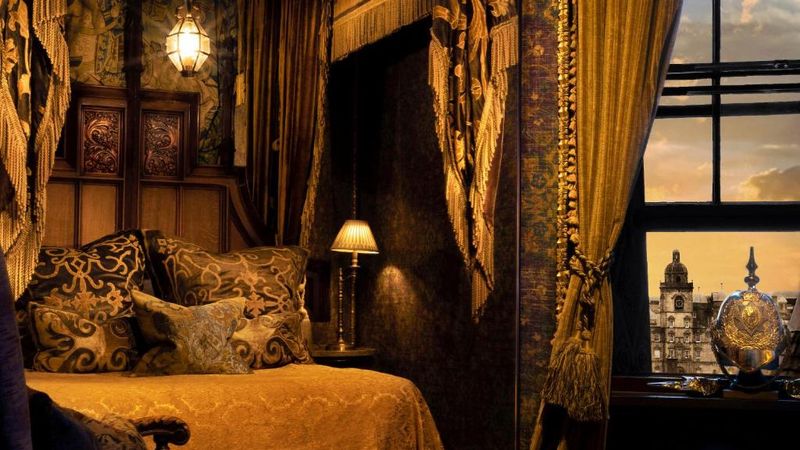
The Witchery by the Castle
Romantic celebrations, atmospheric Old Town stays and travellers who want the hotel itself to feel like an occasion.
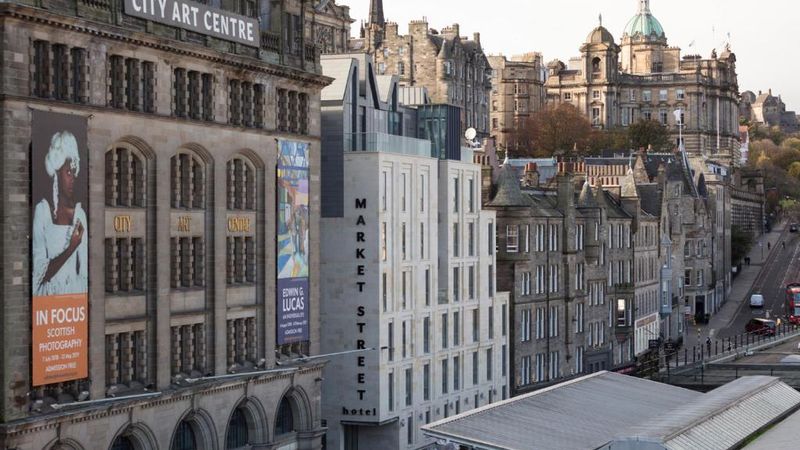
Market Street Hotel
Rail arrivals, short city breaks, contemporary design and travellers splitting time between Old Town and New Town.
Best for first-time all-rounders, shopping, restaurants, couples and central tram access
New Town and the central city
Georgian, polished and central, combining formal squares with shopping streets, galleries, restaurants and bars.
- Nearby focus
- Princes Street Gardens, the Scottish National Gallery, Scott Monument, George Street, St James Quarter and Calton Hill.
- Arrival and transport
- Waverley and the St Andrew Square tram stop serve the eastern side; Princes Street tram stops and city buses help across the wider grid.
- After dark
- Lively around George Street, Rose Street and St Andrew Square, but generally less enclosed and medieval-feeling than the Old Town.
- Price position
- Predominantly upper-mid-range and luxury among this guide’s examples, with premiums for Castle views and landmark addresses.
- The trade-off
- “New Town” covers a broad grid: a hotel near St Andrew Square and one near Charlotte Square create different walks to Waverley and the Royal Mile.
Hotel examples
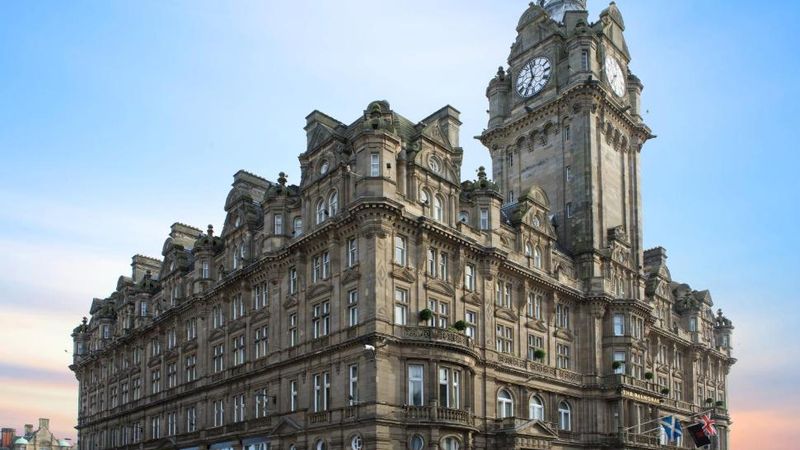
The Balmoral
A first Edinburgh visit, rail arrivals, landmark luxury, spa time and families wanting a central full-service hotel.
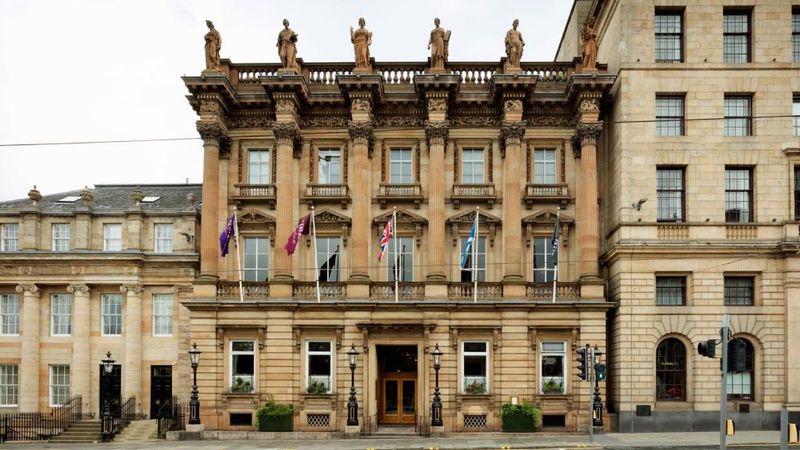
Gleneagles Townhouse
Couples, design-minded city breaks, St Andrew Square dining and travellers who prefer an intimate luxury hotel.
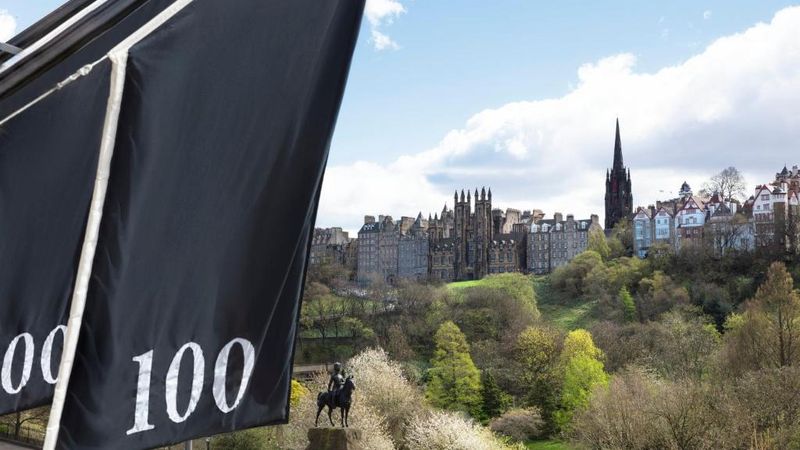
100 Princes Street
Couples, solo travellers, celebrations and families prepared to book interleading rooms directly.
Best for airport arrivals, rail trips, business stays, Murrayfield events and travellers with luggage
West End and Haymarket
A practical western gateway that shifts from grand Princes Street hotels and Georgian terraces to the busier station streets around Haymarket.
- Nearby focus
- West End Village, Dean Village approaches, the galleries at Modern One and Modern Two, and convenient routes towards Princes Street.
- Arrival and transport
- Haymarket station, the airport tram and frequent buses are the main advantage. The farther west the hotel, the more often Old Town plans need a tram, bus or longer walk.
- After dark
- Quieter in some Georgian streets, livelier around pubs and the station; room orientation still matters on main roads.
- Price position
- Mixed upper-mid-range to luxury, with both landmark full-service hotels and contemporary compact rooms.
- The trade-off
- Excellent arrival logistics do not equal doorstep Old Town access; compare the one easy airport journey with the journeys repeated every day.
Hotel examples
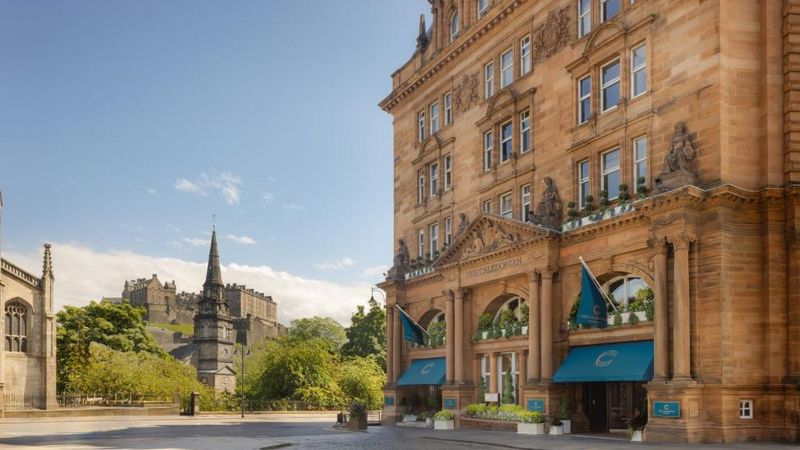
The Caledonian Edinburgh
Spa breaks, families wanting a pool, West End plans, connecting rooms and travellers arriving through Haymarket.
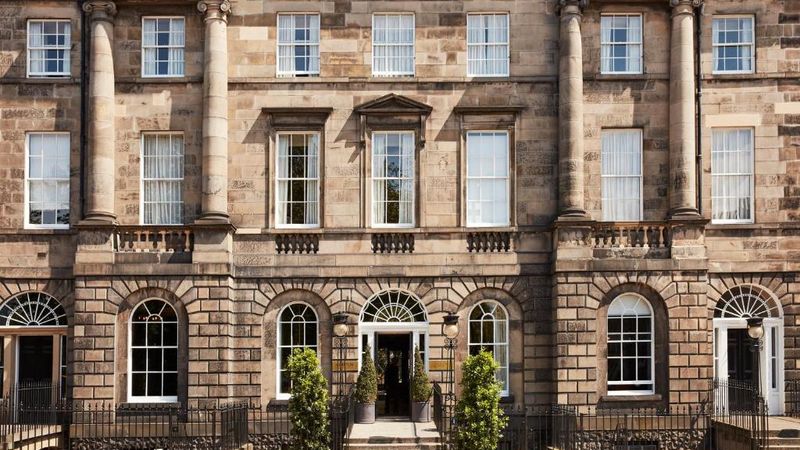
Kimpton Charlotte Square Hotel
Couples, spa weekends, business stays and travellers who prefer the quieter western New Town.
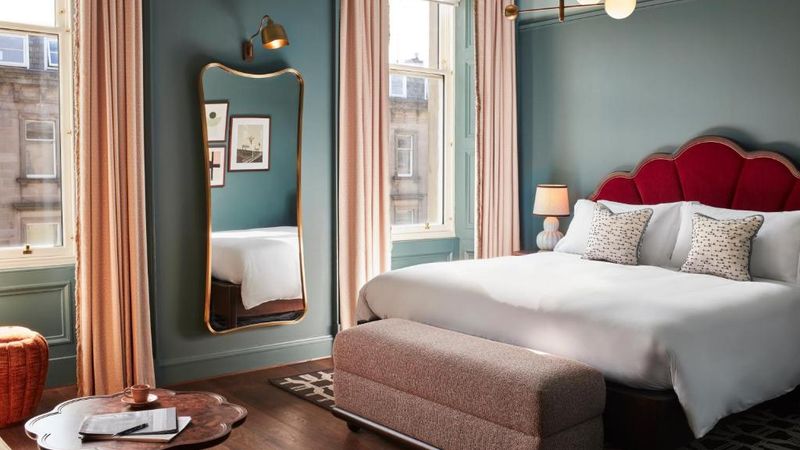
The Hoxton, Edinburgh
Rail and airport-tram arrivals, friends, families, longer stays and travellers who prefer a social contemporary hotel.
Best for repeat visitors, destination dining, neighbourhood stays, university trips and travellers prioritising the hotel itself
Leith waterfront or Southside parkland
Two deliberately different alternatives: Leith is a historic port and dining neighbourhood; the Southside mixes university life, venues, tenements and green-space access.
- Nearby focus
- Leith Shore and the Royal Yacht Britannia to the north; the university, National Museum approaches, the Meadows and Holyrood Park to the south.
- Arrival and transport
- The tram connects central Edinburgh with Leith and Newhaven. Southside journeys rely more on walking, buses or taxis; Prestonfield sits farther into parkland than the university quarter.
- After dark
- Leith has a strong restaurant-and-bar identity around the Shore. Southside varies from student energy near the university to much quieter parkland settings.
- Price position
- Broad and highly property-dependent: the examples here are destination hotels, not evidence that either district is uniformly expensive.
- The trade-off
- Neither choice is a default landmark base. Confirm the final connection after dinner or a late performance, and do not treat Leith and Southside as one physical area.
Hotel examples
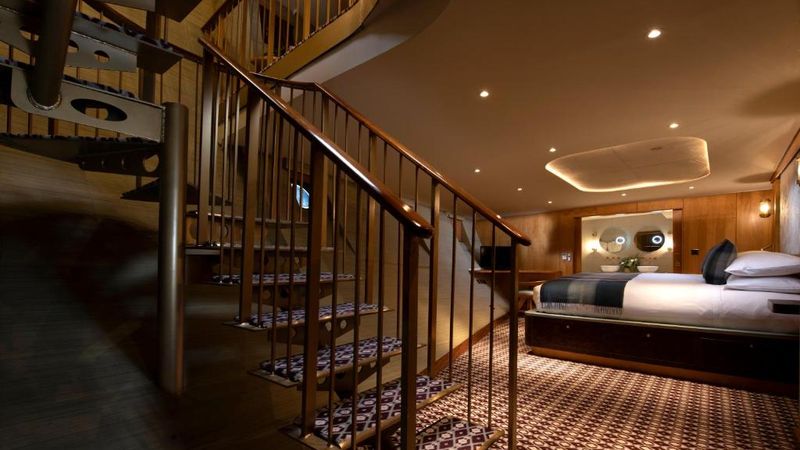
Fingal
Couples, special occasions, maritime design, Leith dining and repeat visitors seeking a stay outside the centre.
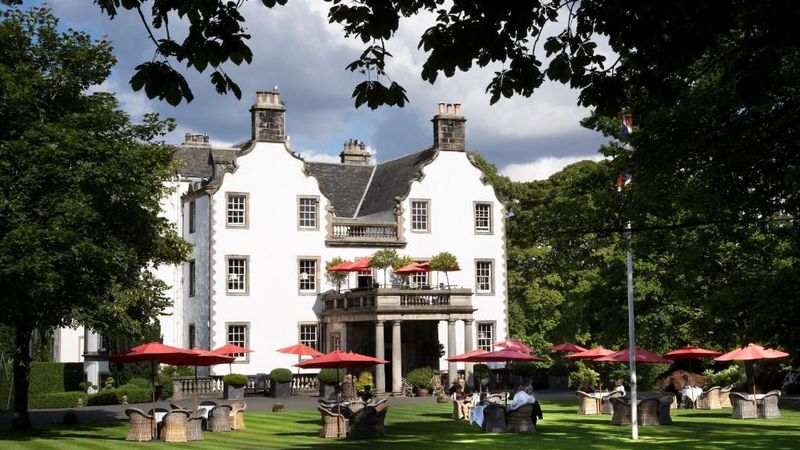
Prestonfield House
Romantic breaks, celebrations, drivers, Arthur’s Seat and travellers who want a secluded hotel experience.
Three comparisons that usually decide the area
Edinburgh looks compact on a map, but its terrain makes straight-line distance a poor booking tool. The route repeated after dinner, the gradient between station and reception, and the street you return to after a performance matter more than being a nominal ten minutes from the Castle.
Old Town or New Town?
Choose the Old Town when the historic city is the trip. The Castle, Royal Mile, closes, Grassmarket and the route towards Holyrood create Edinburgh’s most recognisable setting. It is compelling for a short first visit and for itineraries built around Old Town attractions.
For the next decision, compare our Old Town hotels near the Royal Mile, which separates the ridge, Market Street, Grassmarket and Holyrood by arrival route and room needs.
The price of that atmosphere is physical and operational. Slopes, steps, cobbles, narrow pavements, tour groups, servicing vehicles and late-running venues can all affect the last few hundred metres. A hotel near Waverley on a map may still sit well above the station concourse.
Choose the New Town for the strongest general-purpose base. Restaurants, shops, galleries and Georgian streets sit within the central grid, while St Andrew Square and Princes Street connect directly to the tram corridor. It is usually the easier starting point for a mixed itinerary rather than a purely historic one.
The New Town is not one uniform experience. St Andrew Square is convenient for Waverley and the eastern centre; Charlotte Square and the western streets sit closer to the West End. George Street and Rose Street can be lively at night. Compare the exact block, not just “New Town” in the hotel description.
Waverley or Haymarket?
Choose Waverley when you want the shortest transfer into the Old Town or eastern New Town. Market Street sits below the Old Town ridge; Princes Street and St Andrew Square are on the New Town side. Select the correct station exit before following a generic walking route.
Choose Haymarket for trains approaching from the west, the airport tram, Murrayfield plans and hotels towards the West End. It removes a city-centre transfer on arrival, which matters for a one-night stay or an early departure.
For a longer stay, remove arrival day from the calculation. Saving one transfer at Haymarket may not compensate for a longer journey to every Old Town dinner or venue. Conversely, a hotel beside Waverley can be less useful if the trip revolves around Murrayfield, the western galleries or repeated airport journeys.
Central Edinburgh or Leith?
Stay centrally when this is a short, landmark-led trip and you want to walk between the Old Town, New Town and major sights. Stay in Leith when the Shore, restaurants, waterfront and a neighbourhood evening are part of the purpose—not merely a cheaper bed outside the centre.
The tram makes Leith more connected than older guidebooks imply, but it does not make the waterfront adjacent to the Royal Mile. Count the walk to the platform, wait and final uphill section at the city-centre end. Leith is convincing for a repeat visit or food-led weekend; it is less convincing when every morning begins at the Castle and every night ends in the Old Town.
Match the base to the length of stay
One or two nights
Reduce transfers. Old Town or eastern New Town suits a compact sightseeing break arriving at Waverley. West End or Haymarket is stronger when the airport, an early train or Murrayfield is the fixed point. A destination hotel in Leith or parkland can work for one night only when the hotel itself is the occasion.
Three or four nights
Choose the area serving most of the itinerary. A first trip divided between the Castle, museums, New Town dining and Calton Hill generally favours Old Town or New Town. A festival programme clustered south of the Royal Mile can make Southside more practical. This is long enough for Leith to work if one or two evenings are intentionally spent there.
Five nights or more
Daily comfort begins to outweigh a famous address. Stockbridge, Bruntsfield, Leith and quieter West End or Southside streets can offer a more residential rhythm, nearby food shops and less visitor intensity. The test is the repeated late journey: a pleasant neighbourhood is poor value if every planned evening ends with an awkward connection.
What about Stockbridge, Bruntsfield and Portobello?
These are credible Edinburgh bases, but they solve more specific trips than the four zones in the main comparison.
Stockbridge sits downhill from the New Town with independent shops, cafés, restaurants, the Sunday market and access towards the Water of Leith and Royal Botanic Garden. It suits repeat visitors and longer stays better than a checklist first trip. Remember that the comfortable downhill walk from Princes Street becomes the uphill return.
Bruntsfield and Morningside suit travellers who want cafés, independent shops, the Meadows and a neighbourhood routine south-west of the centre. They are useful for university visits or longer stays, but rely more heavily on buses and longer walks for the Royal Mile and Waverley.
Portobello is Edinburgh’s seaside alternative. It makes sense when beach time and a distinct local stay are deliberate priorities. It should not be sold as a central sightseeing base: confirm the bus journey and late-evening return before comparing room prices.
Common Edinburgh area mistakes
Treating “city centre” as a flat radius
The Old Town ridge, the valley around Princes Street Gardens and the slopes towards Stockbridge, Leith and the Southside turn a short line on a map into very different walks. Check elevation, surfaces and entrances for the complete route.
Booking for the Castle but ignoring the evening
Doorstep access to one daytime attraction can create a poor late journey from restaurants, theatres or festival venues. Plot the final event of a typical day, including the walk after the last tram or bus.
Assuming a landmark view is included
“Castle view” may apply only to named room categories, particular orientations or partial views. Confirm the exact booked room and whether the view is guaranteed in the rate rather than shown as a general hotel feature.
Believing an area can guarantee quiet
Old Town tours, New Town bars, festival venues, function rooms, servicing and construction can affect individual façades. Ask where the room faces and whether a request is confirmed or merely noted.
Driving into the centre without a parking plan
Historic streets, controlled access, one-way systems, limited hotel parking and the city-centre Low Emission Zone can make a car less useful than expected. Confirm the named car park, vehicle eligibility, height restriction, walking route and overnight cost before arrival.
A practical booking sequence
- Mark fixed places and times. Include arrival station, booked attractions, university buildings, event venues and the final evening plan.
- Choose two area candidates. Use the comparison above before opening a long hotel-results list.
- Plot the last 500 metres. Check gradient, steps, cobbles, crossings and the correct station or tram exit with luggage.
- Compare exact rooms. Match room name, size, bed, occupancy, lift route, bathroom, outlook and cancellation conditions.
- Check the payable total. Include VAT, the Edinburgh Visitor Levy where applicable, breakfast, parking, extra beds, deposits and anything collected at the hotel.
- Check festival and event dates. August is the busiest festival period, but Hogmanay, rugby, concerts and conferences can also change price, access and street activity.
- Confirm access and quiet needs in writing. A general icon or request box does not guarantee the assigned route or room.
- Keep a second area. If an event pushes the first choice beyond budget, preserve the essential journey rather than choosing the cheapest scattered result.
Accessibility, hills and luggage change the answer
Waverley publishes step-free access to all platforms, but that does not make every onward street route step free. The station lies between the Old Town and New Town; the hotel can be close yet considerably higher. The Old Town’s historic surfaces and gradients demand particular care.
Use current journey tools for the complete route, then ask the hotel about the pavement approach, threshold, reception, lift, bedroom and bathroom. Confirm whether an accessible room is guaranteed and whether any platform lift, temporary works or festival restrictions change the route. This guide helps narrow the area; it is not an accessibility audit.
The visitor levy belongs in the area comparison
For eligible stays from 24 July 2026, Edinburgh’s visitor levy is 5% of the accommodation charge before VAT, capped at five consecutive nights, with booking-date rules determining liability. It applies throughout the City of Edinburgh Council area, so moving from the Old Town to Leith does not remove it.
Compare the final payable amount, not only the first nightly figure. Check whether the levy appears within the displayed total or is collected separately, especially when comparing bookings made at different times or through different channels.
Continue planning your Edinburgh stay
Once the area is settled, use the main Edinburgh hotel guide to compare the overall shortlist, room details, facilities and each hotel’s practical trade-offs.
For a special final night outside the centre, compare our castle hotels near Edinburgh. That guide separates sleeping in a castle from a mansion stay or a city room with a Castle view, and explains the transfer and early-departure checks.
Choose your Edinburgh base
If you are visiting Edinburgh for the first time
Choose the Old Town when the Castle, Royal Mile and historic atmosphere dominate. Choose the New Town when you want an equally central base with a more regular street grid, broader dining choice and easier tram access.
If you are travelling with children
Start with the New Town for transport and central flexibility, or the Southside for the National Museum, Meadows and university quarter. Confirm the exact occupancy, beds, lift and bathroom before letting the postcode decide.
If you are coming for the August festivals
Map the actual venues before booking. Old Town and Southside can reduce late journeys for many Fringe plans, while New Town works well for a mixed programme. Expect crowds, road restrictions and noise across the centre.
If you want restaurants and a neighbourhood evening
Choose Leith when the Shore and waterfront dining are part of the trip, or Stockbridge for independent shops, cafés and a village-like feel closer to the New Town. Check the late return from central events.
If you arrive by air with luggage
West End, Haymarket, Princes Street and St Andrew Square all sit on the airport-tram corridor. Choose the stop nearest the actual entrance, not the neighbourhood name used in marketing.
If you arrive by train at Waverley
Market Street and the eastern New Town minimise the first transfer. A hotel high in the Old Town can be geographically close while still requiring a steep or stepped final approach.
If you want a quieter stay
Consider West End side streets, Stockbridge, Bruntsfield or a parkland hotel south of the centre. Ask where the room faces and check event dates; no central neighbourhood guarantees silence.
If you have reduced mobility or heavy luggage
Prioritise the complete route from station or tram platform to reception and room. New Town and tram-corridor options are often easier starting points than steep Old Town streets, but only the exact route can confirm suitability.
Keep planning
More Edinburgh planning
Curated guide
Best Boutique Hotels in Edinburgh
Compare seven researched Edinburgh boutique hotels by character, scale, location, room detail, access and the practical trade-offs behind each stay.
Curated guide
Best Edinburgh Christmas Hotels 2026
Edinburgh Christmas and Hogmanay hotels compared: The Balmoral, Caledonian, Market Street and seven more researched bases. No prices shown.
Curated guide
Best Hotels in Edinburgh Old Town (Near the Royal Mile)
Compare hotels in Edinburgh's Old Town near the Royal Mile, with tips on hills, cobbles, noise and the walk from Waverley. Then check prices.
Curated guide
Castle Hotels Near Edinburgh
Compare castle hotels near Edinburgh within easy reach of the city, for a special last night or a wedding. Castle rooms are limited; check prices early.
Related planning
Related guides in this cluster
Continue with these destination and place guides.
Quick answers
Common questions about where to stay in Edinburgh
Concise answers for choosing a base, planning transport and matching the stay to your trip.
What is the best area to stay in Edinburgh for a first-time visitor?
Old Town is the strongest choice when Edinburgh Castle, the Royal Mile and historic atmosphere are the priority. New Town is the better all-rounder for travellers who want central sightseeing plus restaurants, shopping and tram access on a more regular street grid. The better answer depends on hills and evening plans as much as distance.
Is it better to stay in Edinburgh Old Town or New Town?
Choose Old Town for medieval streets, the Castle, Royal Mile and many festival venues. Choose New Town for Georgian architecture, galleries, shopping, restaurants and easier access to the tram corridor. Old Town is generally steeper and more cobbled; New Town still has gradients and busy nightlife streets, so compare the exact address.
Where should a family stay in Edinburgh?
New Town gives families flexible transport and central dining, while the Southside works well for the National Museum, Meadows and university area. Old Town can be convenient for sightseeing but harder with a buggy because of slopes, steps, cobbles and crowds. Verify the room’s legal occupancy, bed layout, lift and bathroom before booking.
Where should I stay for the Edinburgh Fringe?
There is no single Fringe district because venues spread across the city. Old Town, Southside and the central New Town serve many programmes, but the right base is the one near your confirmed late-night venues. Book early, expect unusual demand, and check whether the room faces a performance, pub or servicing street.
Is Leith too far from central Edinburgh?
Leith is a separate neighbourhood rather than a doorstep Old Town base, but the tram links the waterfront corridor with St Andrew Square, Princes Street, Haymarket and the airport. It works best when Leith restaurants and the Shore are part of the trip; it is less persuasive if every morning and evening starts on the Royal Mile.
Where is best to stay in Edinburgh without a car?
Old Town, New Town, West End and Haymarket all work well without a car when matched to the correct station or tram stop. Leith also has tram and bus connections. A car can be a burden in the historic centre, but travellers with access needs should plan the exact step-free route rather than assuming central always means easy.
What is a quieter area to stay in Edinburgh?
Stockbridge, Bruntsfield, West End side streets and some Southside or parkland locations are stronger quiet-base candidates than the busiest Royal Mile streets. Quietness changes by façade, room and event date, so ask about room orientation, nearby bars, functions, servicing and construction.
Does Edinburgh’s visitor levy change which area is cheapest?
The levy applies across the City of Edinburgh Council area, so changing from Old Town to Leith does not avoid it. For eligible stays from 24 July 2026, the rate is 5% of the accommodation charge before VAT for up to five consecutive nights. Compare the final payable total and how the booking displays or collects the levy.
Methodology
This guide compares four practical booking zones rather than treating every Edinburgh neighbourhood as interchangeable. The final zone deliberately compares Leith and the Southside as two different alternatives beyond the central Old Town–New Town–West End core; it is not suggesting they are adjacent. Boundaries are editorial groupings and the exact address, slope, entrance and room remain more important than a neighbourhood label. The ten hotel examples are drawn from our sourced Edinburgh hotel records and are not ranked again here. We checked current official visitor, transport, station, festival, accessibility and levy sources. We did not stay in, inspect or sound-test the hotels for this guide, and this is not a route or access audit. Recheck events, engineering work, levy treatment and the exact booking before travel.
Site-wide method: how we review hotels · editorial policy

Editorial evidenceSources13 cited references supporting this page
Claims are paired with the publisher and access date used during editorial verification.
Old Town character, Royal Mile attractions and the relationship between the Castle and Holyroodhouse
New Town accommodation mix, dining, nightlife and central visitor context
West End character and connections to Haymarket, airport buses and trams
Stockbridge shops, restaurants, market, village-like character and public transport
Leith waterfront history, dining, visitor attractions and accommodation context
Southside character, university position, museums, venues, green spaces and bus links
Tram route through Haymarket, Princes Street, St Andrew Square and Leith plus general public-transport accessibility information
Airport tram route and approximate city-centre journey context
Waverley station facilities and step-free access to all platforms
Old Town gradients and cobbles, and comparatively easier New Town access context
August is Edinburgh’s busiest festival month, with six major festivals running during the month
Visitor levy rate, eligible stay date, booking-date rule and five-night cap
UK requirements for clear total prices and unavoidable charges
Providing clear and accurate information about prices: summary