Where to stay
Where to Stay in the Lake District: 4 Bases Compared
Compare four practical Lake District bases by scenery, walks, transport, evening choice and hotel style, with eight researched hotel examples.
Last reviewed
Quick answer
For a first Lake District visit, stay around Windermere or Ambleside for the easiest mix of rail, buses, boats, restaurants and day-trip choices. Choose Grasmere or Great Langdale when walks and scenery matter more than evening variety; Keswick, Borrowdale or Bassenthwaite for the northern fells; and Ullswater for a quieter lakeside or family-led break. The right valley usually matters more than the hotel star rating.
This is an editorially researched area-selection guide, not a claim of first-hand residence or hotel stays. The eight hotels are examples that show how each base suits different trips; they are not ranked again here.
At a glance
Compare the best areas to stay in Lake District
No Lake District base wins every trip. Windermere and Ambleside are the most flexible all-round choice; Grasmere and Great Langdale put walking and landscape first; Keswick, Borrowdale and Bassenthwaite suit the northern fells and longer outdoor days; while Ullswater and the rural lakes trade restaurant choice for water, space and a stronger sense of retreat.
| Area | Best for | Feel and evenings | Transport | Positioning | Main trade-off |
|---|---|---|---|---|---|
| Windermere and Ambleside | first visits, car-free breaks, lake cruises and flexible sightseeing | The most connected visitor corridor, mixing lake activity, busy towns, restaurants and straightforward access to the central Lakes.Ambleside and Bowness offer the broadest evening choice, while shoreline hotels outside town feel quieter but make dinner more hotel-dependent. | Windermere is the rail terminus; buses continue to Bowness, Ambleside, Grasmere and Keswick. Boat services extend useful one-way days around the lake. | The widest range in the region, though famous lake views and special-occasion hotels carry a substantial premium. | Summer traffic and parking pressure are real, and a Windermere address does not guarantee either a lake view or a walkable town centre. |
| Grasmere and Great Langdale | walking, food-led weekends, couples and fewer cross-park journeys | Compact village life and dramatic central-valley scenery, with many walks beginning close to the accommodation.Grasmere has pubs, cafés and restaurants, but choice narrows earlier than in Ambleside or Keswick. Great Langdale evenings revolve more strongly around the hotel or inn. | Grasmere sits on the core Windermere–Keswick bus corridor. Great Langdale requires a separate valley connection, taxi or car, so check the final leg. | Mostly mid-range to luxury among the examples here, with food, spa access and the exact room category changing the real total. | The scenic position is the reason to stay, but limited late transport makes spontaneous dinners or evenings in another town less convenient. |
| Keswick, Borrowdale and Bassenthwaite | northern-fell walking, outdoor shops, theatre and active multi-night trips | A lively northern market town backed by quieter lake shores, deep valleys and direct access to major fell country.Keswick has the strongest northern choice of pubs, restaurants and shops. Borrowdale and Bassenthwaite are calmer, with evenings centred on the property. | Penrith is the main rail gateway for Keswick. Buses serve Keswick and core valleys, but rural hotels require a timetable check and often a pre-booked taxi. | Keswick offers a broader spread; full-service lakeside and country-estate hotels sit toward the upper end. | The farther the hotel is from Keswick, the stronger the scenery and retreat can feel—but the more the stay depends on its own dining and facilities. |
| Ullswater and the rural lakes | families, water activities, spa time and travellers seeking a self-contained retreat | Quieter, more dispersed lake country where water, estate grounds and the hotel itself become a larger part of the trip.Expect fewer walk-out dining choices. Strong in-house restaurants, family spaces, pools and activities matter more than they do in a town base. | Penrith is the key rail gateway for Ullswater. Bus and boat options vary by shore and season; Bassenthwaite and other rural properties often work best with a car or booked taxi. | Predominantly upper-mid-range and luxury among full-service lakeside resorts; compare what the rate includes before judging value. | Space and quiet come with longer final transfers and less flexibility when weather changes or someone wants a different dinner plan. |
Area by area
Which Lake District base fits your trip?
Use the examples to understand each area’s hotel range; they are not a second ranking.
Best for first visits, car-free breaks, lake cruises and flexible sightseeing
Windermere and Ambleside
The most connected visitor corridor, mixing lake activity, busy towns, restaurants and straightforward access to the central Lakes.
- Nearby focus
- Windermere lake cruises, Bowness waterfront, Ambleside, Stock Ghyll Force, Rydal and easy onward trips towards Grasmere.
- Arrival and transport
- Windermere is the rail terminus; buses continue to Bowness, Ambleside, Grasmere and Keswick. Boat services extend useful one-way days around the lake.
- After dark
- Ambleside and Bowness offer the broadest evening choice, while shoreline hotels outside town feel quieter but make dinner more hotel-dependent.
- Price position
- The widest range in the region, though famous lake views and special-occasion hotels carry a substantial premium.
- The trade-off
- Summer traffic and parking pressure are real, and a Windermere address does not guarantee either a lake view or a walkable town centre.
Hotel examples
Langdale Chase Hotel
A romantic first visit, landmark architecture, lake views and travellers who want Windermere on the doorstep.
Gilpin Hotel & Lake House
Celebrations, couples, private spa facilities and travellers planning the hotel as a major part of the trip.
Rothay Manor Hotel
Ambleside first visits, boutique country-house stays, food-focused couples and dog owners in the correct room.
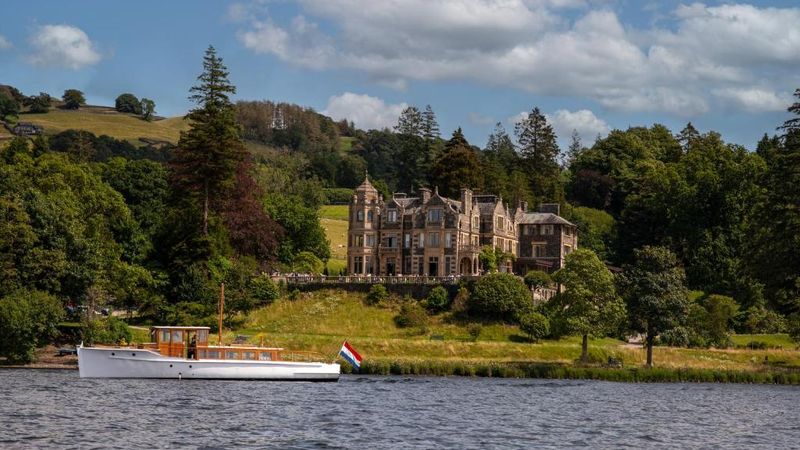
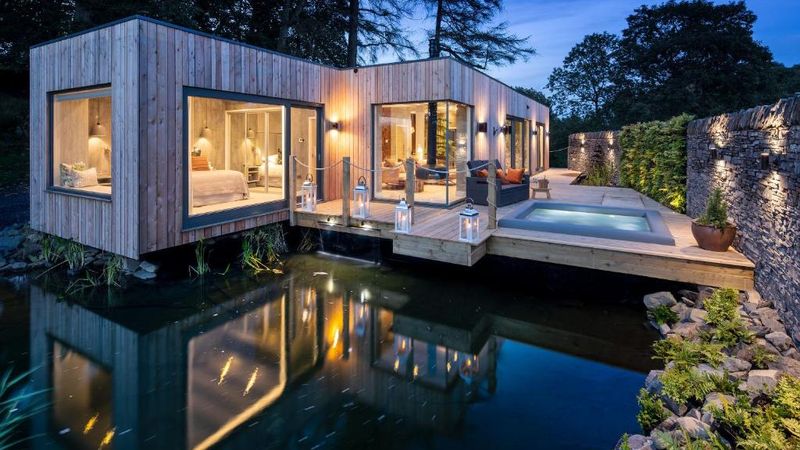
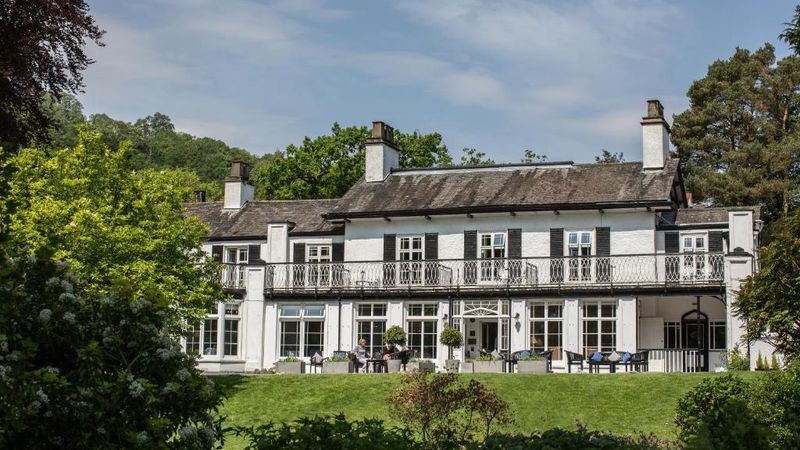
Best for walking, food-led weekends, couples and fewer cross-park journeys
Grasmere and Great Langdale
Compact village life and dramatic central-valley scenery, with many walks beginning close to the accommodation.
- Nearby focus
- Grasmere village, Dove Cottage, Rydal Water, Easedale, the Langdale Pikes and valley walks at several levels.
- Arrival and transport
- Grasmere sits on the core Windermere–Keswick bus corridor. Great Langdale requires a separate valley connection, taxi or car, so check the final leg.
- After dark
- Grasmere has pubs, cafés and restaurants, but choice narrows earlier than in Ambleside or Keswick. Great Langdale evenings revolve more strongly around the hotel or inn.
- Price position
- Mostly mid-range to luxury among the examples here, with food, spa access and the exact room category changing the real total.
- The trade-off
- The scenic position is the reason to stay, but limited late transport makes spontaneous dinners or evenings in another town less convenient.
Hotel examples
The Forest Side
Destination dining, couples, Grasmere walking and travellers who prefer a small country house to a full resort.
Brimstone Hotel
Couples, spa-led breaks, winter stays and walkers who want to be based in Great Langdale.
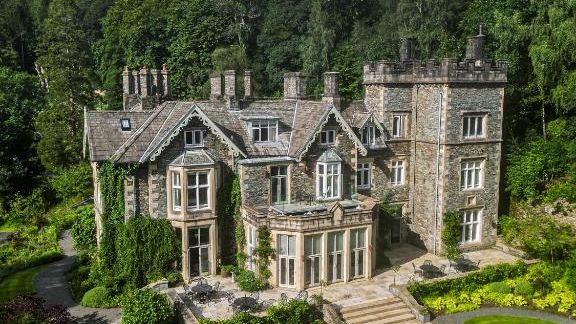
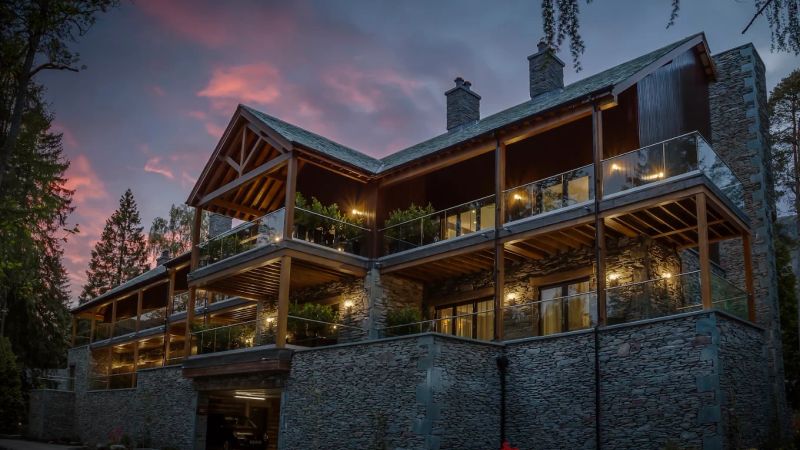
Best for northern-fell walking, outdoor shops, theatre and active multi-night trips
Keswick, Borrowdale and Bassenthwaite
A lively northern market town backed by quieter lake shores, deep valleys and direct access to major fell country.
- Nearby focus
- Derwentwater, Theatre by the Lake, Catbells, Borrowdale, Whinlatter, Skiddaw and Bassenthwaite Lake.
- Arrival and transport
- Penrith is the main rail gateway for Keswick. Buses serve Keswick and core valleys, but rural hotels require a timetable check and often a pre-booked taxi.
- After dark
- Keswick has the strongest northern choice of pubs, restaurants and shops. Borrowdale and Bassenthwaite are calmer, with evenings centred on the property.
- Price position
- Keswick offers a broader spread; full-service lakeside and country-estate hotels sit toward the upper end.
- The trade-off
- The farther the hotel is from Keswick, the stronger the scenery and retreat can feel—but the more the stay depends on its own dining and facilities.
Hotel examples
Lodore Falls Hotel & Spa
Spa weekends, Borrowdale walking, Derwentwater scenery and travellers wanting a larger full-service hotel.
Armathwaite Hall Hotel & Spa
Country-house breaks, spa time, families, celebrations and travellers exploring the quieter northern Lakes.
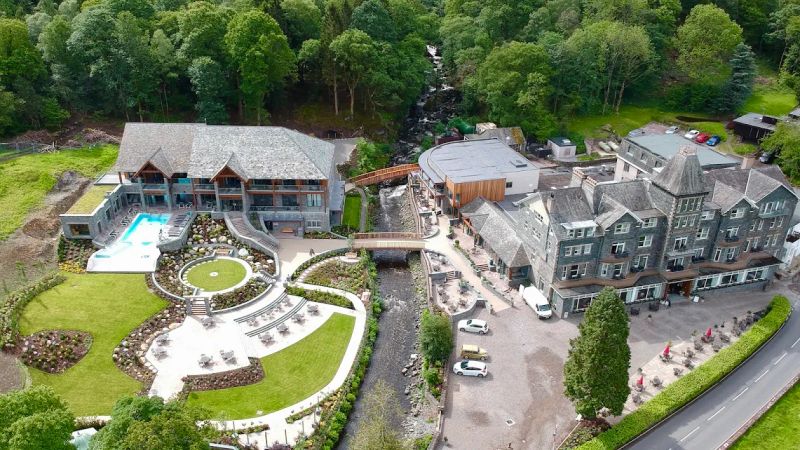
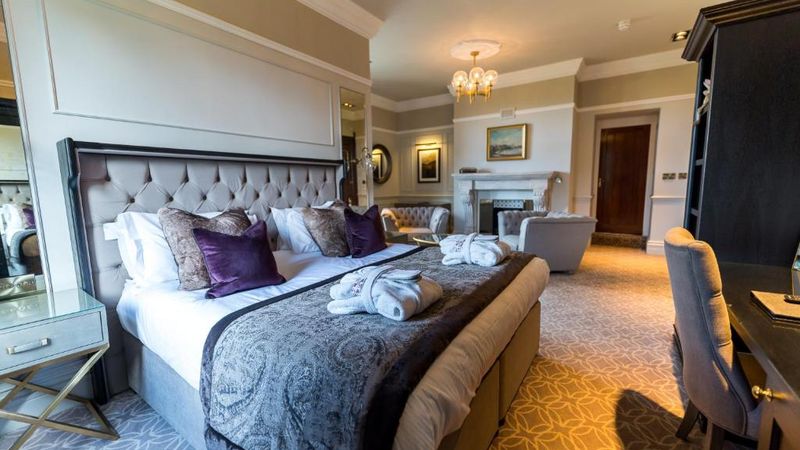
Best for families, water activities, spa time and travellers seeking a self-contained retreat
Ullswater and the rural lakes
Quieter, more dispersed lake country where water, estate grounds and the hotel itself become a larger part of the trip.
- Nearby focus
- Ullswater, Aira Force, the Ullswater Way, Helvellyn approaches and estate-based activities around the quieter northern lakes.
- Arrival and transport
- Penrith is the key rail gateway for Ullswater. Bus and boat options vary by shore and season; Bassenthwaite and other rural properties often work best with a car or booked taxi.
- After dark
- Expect fewer walk-out dining choices. Strong in-house restaurants, family spaces, pools and activities matter more than they do in a town base.
- Price position
- Predominantly upper-mid-range and luxury among full-service lakeside resorts; compare what the rate includes before judging value.
- The trade-off
- Space and quiet come with longer final transfers and less flexibility when weather changes or someone wants a different dinner plan.
Hotel examples
Another Place, The Lake
Active families, swimming, lake sports, relaxed group trips and dog owners booking the right room.
Armathwaite Hall Hotel & Spa
Country-house breaks, spa time, families, celebrations and travellers exploring the quieter northern Lakes.
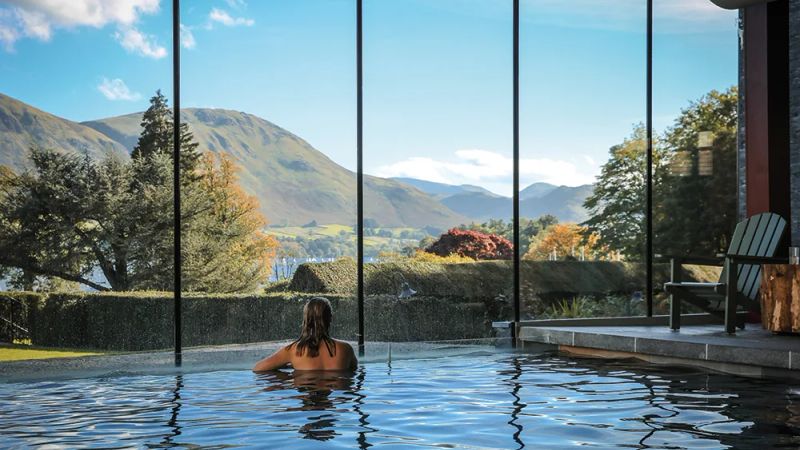
Start with geography, not a hotel list
The Lake District is not one compact resort. Windermere, Ullswater, Derwentwater and Bassenthwaite may sit on the same holiday map, but narrow roads, busy villages and mountain weather make cross-park days slower and less predictable than the mileage suggests. The most useful first decision is therefore not “Which hotel looks best?” but “Which valley will improve most of our days?”
A flexible sightseeing trip benefits from the Windermere–Ambleside–Grasmere corridor. A walking trip becomes easier when the boots can go on at the hotel rather than after an hour in the car. A family resort can make poor weather much less disruptive, while a remote country house works best when dinner, spa time and the grounds are part of the plan rather than substitutes for it.
The four groupings above are deliberately broad. Always open the exact address: two hotels marketed around the same lake can sit on different shores, and the route between them may not resemble the straight line on a map.
Four comparisons that usually decide the base
Windermere or Ambleside?
Choose Windermere or Bowness when the rail arrival and lake cruises are central to the trip. Windermere station removes the need for a taxi from the main line, while Bowness has the busiest waterfront, boat departures and a large concentration of visitor facilities.
Choose Ambleside for quicker access towards Rydal, Grasmere and the central fells, plus a strong choice of independent restaurants and outdoor shops. Ambleside has no railway station, so a car-free arrival continues by bus or taxi from Windermere.
The label “Windermere” needs care. A hotel can use the lake or town name while sitting well outside the centre. That may be exactly right for views and quiet, but it changes dinner, luggage and evening transport.
Grasmere or Great Langdale?
Choose Grasmere for a compact village, central position and core bus connections. It suits mixed days: a walk in the morning, a literary or food stop in the afternoon and a choice of places to eat without driving.
Choose Great Langdale when the valley itself is the purpose. The surrounding fells feel immediate and the evening quiet is part of the appeal. In return, late transport and restaurant choice narrow considerably. Check how the final bus or taxi works before choosing it for a car-free short break.
Keswick or Borrowdale?
Choose Keswick for the northern Lakes’ best combination of outdoor shops, pubs, restaurants, theatre and bus connections. It is a strong bad-weather base and makes sense for travellers whose walking group may want different plans.
Choose Borrowdale when access to the valley and surrounding fells matters more than town choice. A lakeside or valley hotel can shorten major walking days, but dinner and evening flexibility become more dependent on the property. Confirm the last bus rather than assuming a taxi will be easy to find after dinner.
Ullswater or the central Lakes?
Choose Ullswater for a quieter shoreline, water activity and eastern approaches to the fells. Penrith is the logical rail gateway, and seasonal boats can make excellent linear walks. The dispersed shore means the exact hotel position matters greatly.
Choose the central Lakes when the itinerary still contains many unrelated highlights. Ambleside or Grasmere makes it easier to change direction after checking the weather. Ullswater is most rewarding when several days genuinely belong there rather than when it is used as a scenic dormitory for daily trips west.
Match the base to the length of stay
One or two nights
Reduce transfers aggressively. Match the hotel to the arrival side of the park and one main activity. A beautiful remote room loses value if Friday evening is spent arranging the final taxi and Sunday morning begins with a long cross-park drive.
Three nights
This is the useful minimum for many first visits: arrival, two full days and some ability to change the order when the weather turns. Windermere, Ambleside, Grasmere or Keswick are forgiving bases because food and transport do not rely entirely on the hotel.
Four or five nights
A rural lake or valley becomes more persuasive. There is time for a serious fell day, a boat or lower-level day and an afternoon that actually uses the spa, grounds or restaurant. One base is normally calmer than moving halfway through unless the trip deliberately combines the far south and far north.
Choose the hotel feature that rescues a wet day
Rain is not a planning failure in the Lakes. It is a reason to choose facilities honestly. A 20-metre pool and organised activities can protect a family break; a thermal suite can balance two walking days; a food-led country house makes an early return feel intentional. Conversely, do not pay for a spa, formal dinner or extensive grounds if the itinerary leaves no time to use them.
The hotel examples on this page make those differences concrete. Another Place, The Lake is the family-and-activity proposition; The Forest Side is the food-led Grasmere choice; Lodore Falls combines Borrowdale access with a substantial adults-only spa; Brimstone is an adults-only retreat in Great Langdale; Gilpin emphasises private spa accommodation; Armathwaite Hall offers estate facilities; Rothay Manor is a smaller Ambleside base; and Langdale Chase makes Windermere itself part of the occasion.
Common Lake District booking mistakes
Treating “lake view” as a hotel-wide feature
A shoreline property can also have courtyard, woodland, fell-facing and partial-view rooms. Compare the exact category name and photographs, then ask the hotel to confirm the outlook if it is central to the price you are willing to pay.
Assuming spa access follows the room
Spa rules vary by hotel, room and rate. Access may be timed, adults-only, included only with suites or charged separately. Treatments usually need a separate reservation. Read the inclusion attached to the exact rate rather than the hotel overview.
Underestimating the final transfer
Windermere and Penrith are gateways, not final destinations for most hotels. Check the bus stop, last service, taxi availability and luggage route. In rural valleys, mobile reception and late taxis should not be treated as guaranteed fallbacks.
Building a checklist across the whole park
A daily plan that jumps from Ullswater to Coniston, then Borrowdale to Windermere, turns a holiday into repeated driving. Group days by lake or valley and keep one weather alternative nearby. The landscape becomes more enjoyable when it is not merely seen through a windscreen.
Booking dinner after the room
At food-led or remote hotels, dinner is part of the logistics. Check restaurant opening days, whether the only option is a tasting menu, child and dog policies, and what is included in the rate before confirming travel.
A practical booking sequence
- Mark the fixed days. Note the walks, boat trips, attractions and restaurant reservations that genuinely matter.
- Choose two base candidates. Use the comparison above and resist opening a region-wide hotel search first.
- Check the arrival and repeated journeys. Include the final rail transfer, parking, bus stop and evening return—not just the headline driving time.
- Compare exact rooms and totals. Match outlook, stairs, bed set-up, breakfast, dinner, parking and spa access.
- Keep a weather alternative. Identify a lower-level walk and an indoor pleasure near the chosen base.
- Confirm access requirements directly. Ask about the complete route from parking or drop-off to reception, room and bathroom; this guide is not an accessibility audit.
- Recheck close to travel. Transport, mountain conditions, lake services and hotel policies can change after booking.
Accessibility, families and dogs change the answer
Historic houses, split-level grounds and converted buildings can make a visually appealing room unsuitable for a particular guest. “Accessible” is not one standard layout. Ask for measurements and the route through the property, including surfaces, gradients, thresholds, lifts and emergency arrangements.
Families should confirm the named room occupancy, real beds versus sofa beds, internal doors, cots, child ages, pool times and supervision rules. Dog-friendly can apply only to selected bedrooms and dining spaces, often with a nightly charge. These details belong in the hotel’s current terms, not in assumptions based on a destination label.
Use live sources for the last mile
This page is designed to help choose a base, not replace live operational information. Before travel, check the Lake District National Park’s current transport guidance, the relevant bus and boat operator, mountain forecasts and the hotel’s written confirmation. If the trip depends on one last service, one accessible route or one spa session, verify it directly for the dates.
Once the area is settled, use the main Lake District hotel guide to compare the eight hotels in more detail, including room choices, facilities, transport notes and the evidence behind each recommendation.
Choose your Lake District base
If you are visiting the Lake District for the first time
Choose Windermere or Ambleside. The rail terminus, core bus corridor, boats and wide choice of food make it the easiest base from which to learn how the region fits together.
If you are travelling without a car
Prioritise Windermere, Ambleside or Grasmere and check the final walk from the stop. Keswick also works via Penrith, but a scenic rural hotel may still require a taxi.
If you want walks from the door
Start with Grasmere, Great Langdale or Borrowdale. Choose the valley that matches the walks you will actually attempt instead of crossing the park each morning.
If you are planning a family break
Ullswater works well when the hotel provides family rooms, pool time and activities. A town base is better if independent restaurants and weather-proof attractions matter more.
If you want a spa-led weekend
Choose the hotel before the town, then verify whether thermal access is included, timed or adults-only. Lodore Falls, Brimstone, Gilpin and Armathwaite Hall offer meaningfully different spa propositions.
If you have only two nights
Reduce the final transfer and stay in one corridor. A dramatic remote hotel can consume too much of a short break if arrival, dinner and the next day’s plans point elsewhere.
Keep planning
More Lake District planning
Curated guide
Best Dog-Friendly Hotels in the Lake District
Compare 10 researched dog-friendly Lake District hotels by room rules, dog-friendly dining, walks, facilities and essential booking checks.
Curated guide
Best Family Hotels in the Lake District
Compare 10 researched Lake District family hotels by room layout, pool access, children’s activities, location and essential booking checks.
Curated guide
Best Lake District Christmas Breaks 2026
Spa and luxury Lake District Christmas breaks compared: Gilpin, The Swan, Brimstone and seven more researched hotels. No prices—check live rooms.
Curated guide
Best Spa Hotels in the Lake District
Compare 10 researched Lake District spa hotels by thermal facilities, pools, treatments, access rules, location and what the room rate includes.
Related planning
Related guides in this cluster
Continue with these destination and place guides.
Quick answers
Common questions about where to stay in Lake District
Concise answers for choosing a base, planning transport and matching the stay to your trip.
What is the best area to stay in the Lake District for a first visit?
Windermere and Ambleside are the most versatile first base because they combine the rail terminus, frequent core bus links, lake cruises, restaurants and access towards Grasmere. Choose Keswick instead when most planned days are in the northern fells or Borrowdale.
Can you visit the Lake District without a car?
Yes, especially along the Windermere–Ambleside–Grasmere corridor or in Keswick via Penrith. Plan the complete journey: rail gateway, last bus, luggage walk and any taxi. Seasonal services and rural valleys need more checking than the main towns.
Where should couples stay in the Lake District?
Grasmere and Great Langdale suit couples who want walks, scenery and quieter evenings. Windermere has the strongest range of landmark lakefront and special-occasion hotels, while Borrowdale works for couples putting long fell days ahead of restaurant choice.
Which Lake District base is best for families?
Ullswater is persuasive when staying at a family-led resort such as Another Place, The Lake. Windermere and Ambleside offer more flexible food, boats and wet-weather choices. Confirm the exact family room, child ages, swim times and activity rules before booking.
Where should I stay for walking in the Lake District?
Grasmere and Great Langdale are strong for central fells and walking from the door; Keswick and Borrowdale are better for the northern fells. Pick the valley nearest the majority of your routes and keep a lower-level alternative for poor mountain weather.
How many nights should I stay in the Lake District?
Three nights gives two full days and some weather flexibility. Four or five nights is more comfortable when you want a fell day, a lake day and time to enjoy the hotel. For most short trips, one well-chosen base is better than changing hotels.
Methodology
This guide compares four broad, practical base patterns rather than naming every lake and valley. The areas are editorial groupings, and hotels within a group can still be far apart on narrow roads. We checked current National Park, UNESCO and official hotel sources, avoided fixed driving promises and did not use live room prices. We did not stay in or accessibility-audit the hotels for this guide. Recheck weather, transport, room details, spa rules and dining for the exact dates before booking.
Site-wide method: how we review hotels · editorial policy

Editorial evidenceSources12 cited references supporting this page
Claims are paired with the publisher and access date used during editorial verification.
National Park scale, visitor planning and the need to choose a practical area
Rail gateways, core buses, seasonal valley services and passenger boat connections
World Heritage cultural landscape status and regional context
Windermere and Ambleside boat, bus and rail planning
Langdale Chase lakeside position, room distinctions and hotel facilities
Gilpin accommodation, private spa facilities and location
Rothay Manor scale, Ambleside position and hotel facilities
Forest Side accommodation, dining and Grasmere position
Brimstone adults-only policy, spa access and Great Langdale position
Lodore Falls rooms, Derwentwater position and spa overview
Armathwaite Hall estate, family facilities and spa overview
Another Place family facilities, pool, activities and Ullswater position