Where to stay
Where to Stay in Bath: 4 Best Areas Compared
Compare four practical Bath bases for sightseeing, Georgian atmosphere, parking and spa breaks, with ten researched hotel examples and honest trade-offs.
Last reviewed
Quick answer
For a first visit or a car-free weekend, stay in central Bath around the Abbey Quarter, SouthGate or Westgate: Bath Spa station, the Roman Baths, Bath Abbey and Thermae Bath Spa are close together. Choose Upper Town for the Royal Crescent and a quieter Georgian setting, Bathwick for Great Pulteney Street and the Holburne Museum, or the western edge and countryside when gardens, parking and hotel time matter more than walking straight to every sight.
This is an editorially researched area-selection guide, not a claim of first-hand residence or hotel stays. The ten hotels are sourced examples showing how each base changes the trip; they are not ranked again here.
At a glance
Compare the best areas to stay in Bath
Central Bath is the strongest all-round base for first visits, rail arrivals and short stays. Upper Town trades an uphill approach for landmark Georgian streets and calmer evenings. Bathwick sits just across the river with Great Pulteney Street, parks and design-led hotels. The western edge and countryside suit drivers and spa-led retreats, but require a longer walk, taxi or planned connection for central sightseeing.
| Area | Best for | Feel and evenings | Transport | Positioning | Main trade-off |
|---|---|---|---|---|---|
| Abbey Quarter, SouthGate and Westgate | first visits, car-free weekends, Roman Baths, Bath Abbey and Thermae Bath Spa | The compact visitor core: busy by day, convenient for the main sights, and easiest for arriving by train or coach with a short itinerary.Restaurants, pubs, events and early servicing keep parts of the centre active; ask where the room faces when sleep is a priority. | Bath Spa railway station and Bath Bus Station are in the centre. Compare the final walk, paving and hotel entrance rather than assuming every central address is level. | The broadest range in this guide, though the most convenient spa and boutique hotels usually sit in the upper-mid-range or luxury bands. | Maximum sightseeing convenience brings daytime crowds, limited hotel parking and a greater chance of street or venue noise. |
| Upper Town and the Royal Crescent | Georgian atmosphere, special occasions, couples and travellers who prefer calmer evenings | Quieter and more residential than the central shopping streets, with Bath’s grand Georgian set pieces and independent businesses around the upper city.Generally calmer than the Abbey Quarter, although restaurants, bars, events and individual room orientation still affect noise. | The area is uphill from Bath Spa station and the Abbey Quarter. Plan the arrival with luggage and confirm taxi drop-off or parking when needed. | Upper-mid-range to luxury, led by independent townhouses and the landmark Royal Crescent address. | The uphill return is the real cost: a short map distance can be tiring after dinner, in rain or for anyone with limited stamina. |
| Bathwick and Great Pulteney Street | couples, design-led stays, the Holburne Museum, parks and a calmer city base | Elegant, design-conscious and slightly removed from the busiest core, with a long Georgian axis leading to museums, gardens and the canal.A slower-feeling return than the shopping core, with local restaurants and pubs but less concentrated late-night activity. | Most central sights remain across the river on foot. Check the precise hotel building, parking arrangement and route if steps or gradients matter. | Mostly upper-mid-range, with a premium for individual townhouse design and parking where offered. | You cross the river for most headline sights, and converted Georgian buildings can involve annexes, stairs and markedly different room layouts. |
| Western edge and Bath countryside | drivers, spa time, gardens, parking, families wanting space and slower couples’ breaks | Garden-led, spacious and retreat-focused: the hotel becomes a larger part of the trip and the city centre becomes an excursion rather than the doorstep.Best when dinner, drinks and downtime happen at the hotel; spontaneous late returns from central Bath need more planning. | The Bath Priory needs a longer walk or short road journey to the centre; Homewood near Freshford requires a car, taxi or planned rail connection for Bath sightseeing. | Luxury-led, with the price paying for grounds, pools, spa facilities and a retreat setting rather than a central postcode. | You give up walk-out sightseeing and should price the full transport plan, particularly for evening meals, wet weather and departure day. |
Area by area
Which Bath base fits your trip?
Use the examples to understand each area’s hotel range; they are not a second ranking.
Best for first visits, car-free weekends, Roman Baths, Bath Abbey and Thermae Bath Spa
Abbey Quarter, SouthGate and Westgate
The compact visitor core: busy by day, convenient for the main sights, and easiest for arriving by train or coach with a short itinerary.
- Nearby focus
- Roman Baths, Bath Abbey, Thermae Bath Spa, Pulteney Bridge, Parade Gardens, SouthGate and the central shopping streets.
- Arrival and transport
- Bath Spa railway station and Bath Bus Station are in the centre. Compare the final walk, paving and hotel entrance rather than assuming every central address is level.
- After dark
- Restaurants, pubs, events and early servicing keep parts of the centre active; ask where the room faces when sleep is a priority.
- Price position
- The broadest range in this guide, though the most convenient spa and boutique hotels usually sit in the upper-mid-range or luxury bands.
- The trade-off
- Maximum sightseeing convenience brings daytime crowds, limited hotel parking and a greater chance of street or venue noise.
Hotel examples
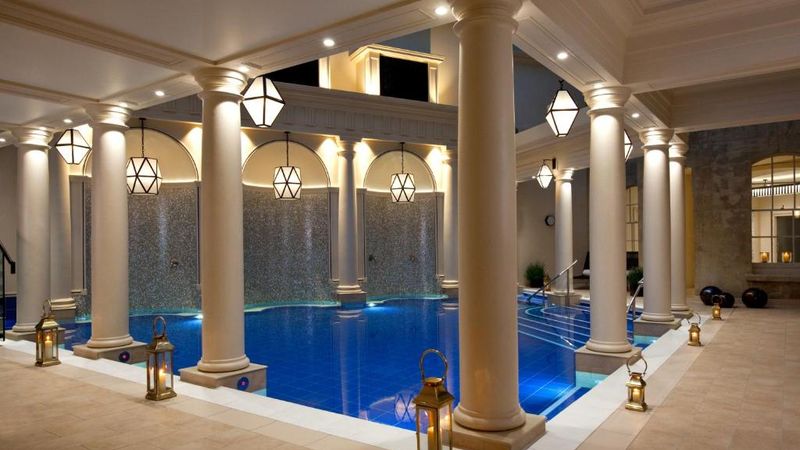
The Gainsborough Bath Spa
Spa-led couples, first visits and short car-free stays close to the Roman Baths and station.
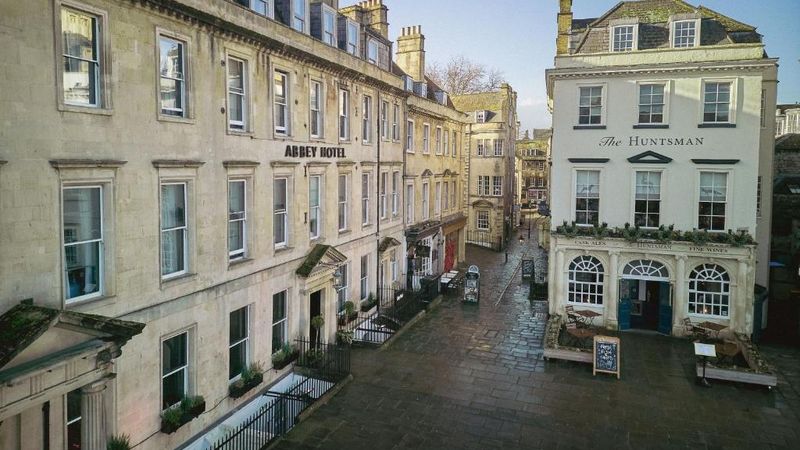
Abbey Hotel Bath
First visits, rail arrivals, short city breaks, solo travellers and dog owners who arrange the right room.
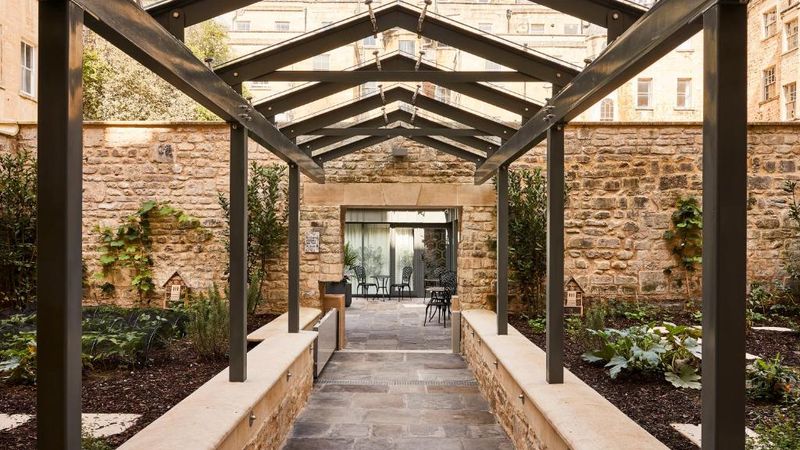
Hotel Indigo Bath
Car-free city breaks, design-minded couples, IHG members and dog owners who secure a pet-friendly room.
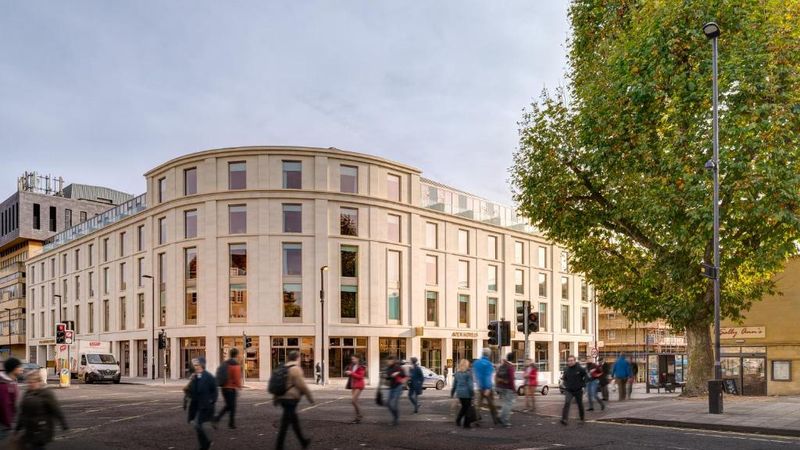
Apex City of Bath Hotel
Families, groups, business travellers and visitors prioritising a pool or a more predictable modern layout.
Best for Georgian atmosphere, special occasions, couples and travellers who prefer calmer evenings
Upper Town and the Royal Crescent
Quieter and more residential than the central shopping streets, with Bath’s grand Georgian set pieces and independent businesses around the upper city.
- Nearby focus
- Royal Crescent, The Circus, No.1 Royal Crescent, Assembly Rooms, Margaret’s Buildings and Royal Victoria Park.
- Arrival and transport
- The area is uphill from Bath Spa station and the Abbey Quarter. Plan the arrival with luggage and confirm taxi drop-off or parking when needed.
- After dark
- Generally calmer than the Abbey Quarter, although restaurants, bars, events and individual room orientation still affect noise.
- Price position
- Upper-mid-range to luxury, led by independent townhouses and the landmark Royal Crescent address.
- The trade-off
- The uphill return is the real cost: a short map distance can be tiring after dinner, in rain or for anyone with limited stamina.
Hotel examples
The Royal Crescent Hotel & Spa
Special occasions, Georgian atmosphere, garden spa time and families booking the correct configuration.
The Queensberry Hotel
Food-focused couples, independent-hotel loyalists and Upper Town weekends.
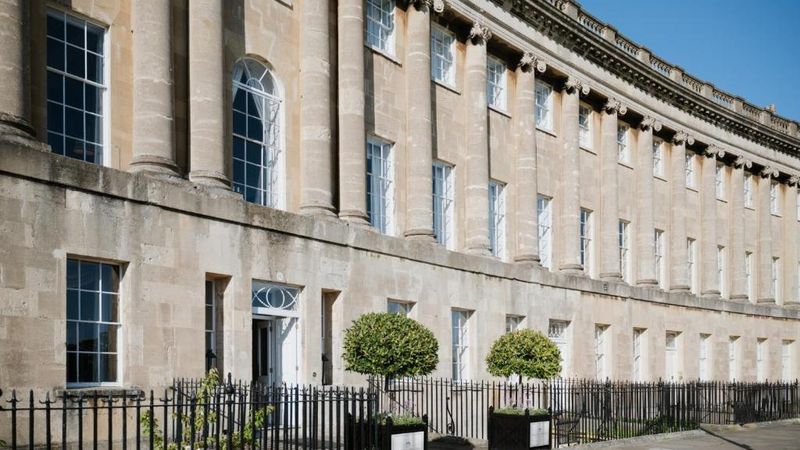
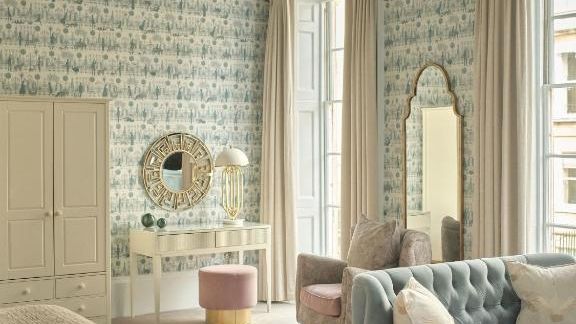
Best for couples, design-led stays, the Holburne Museum, parks and a calmer city base
Bathwick and Great Pulteney Street
Elegant, design-conscious and slightly removed from the busiest core, with a long Georgian axis leading to museums, gardens and the canal.
- Nearby focus
- Pulteney Bridge, Great Pulteney Street, Holburne Museum, Sydney Gardens, Henrietta Park and the Kennet and Avon Canal.
- Arrival and transport
- Most central sights remain across the river on foot. Check the precise hotel building, parking arrangement and route if steps or gradients matter.
- After dark
- A slower-feeling return than the shopping core, with local restaurants and pubs but less concentrated late-night activity.
- Price position
- Mostly upper-mid-range, with a premium for individual townhouse design and parking where offered.
- The trade-off
- You cross the river for most headline sights, and converted Georgian buildings can involve annexes, stairs and markedly different room layouts.
Hotel examples
No.15 by GuestHouse
A design-led romantic break, a Bath city stay or a treatment-focused spa visit.
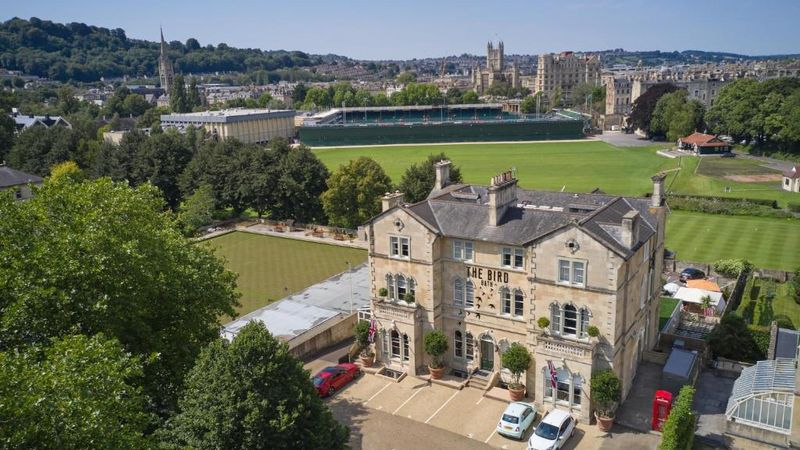
The Bird, Bath
Design-led couples, relaxed city breaks, drivers who reserve parking and travellers who prefer Bathwick to the busiest central streets.
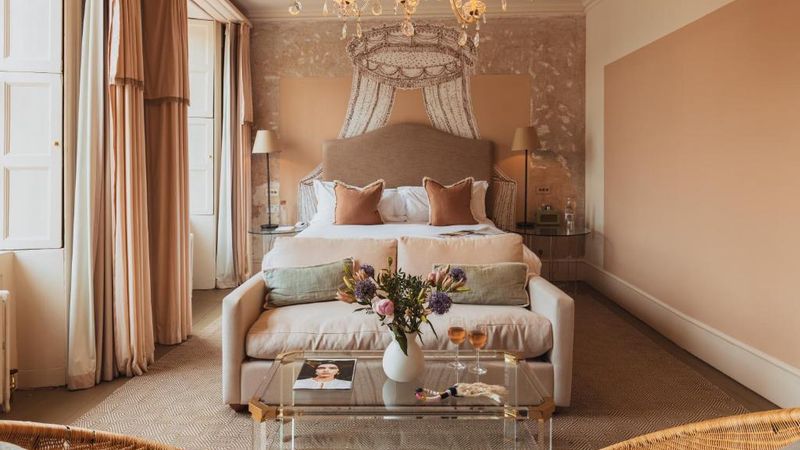
Best for drivers, spa time, gardens, parking, families wanting space and slower couples’ breaks
Western edge and Bath countryside
Garden-led, spacious and retreat-focused: the hotel becomes a larger part of the trip and the city centre becomes an excursion rather than the doorstep.
- Nearby focus
- Royal Victoria Park on the city edge, hotel gardens and spa facilities, plus the wider countryside south and west of Bath.
- Arrival and transport
- The Bath Priory needs a longer walk or short road journey to the centre; Homewood near Freshford requires a car, taxi or planned rail connection for Bath sightseeing.
- After dark
- Best when dinner, drinks and downtime happen at the hotel; spontaneous late returns from central Bath need more planning.
- Price position
- Luxury-led, with the price paying for grounds, pools, spa facilities and a retreat setting rather than a central postcode.
- The trade-off
- You give up walk-out sightseeing and should price the full transport plan, particularly for evening meals, wet weather and departure day.
Hotel examples
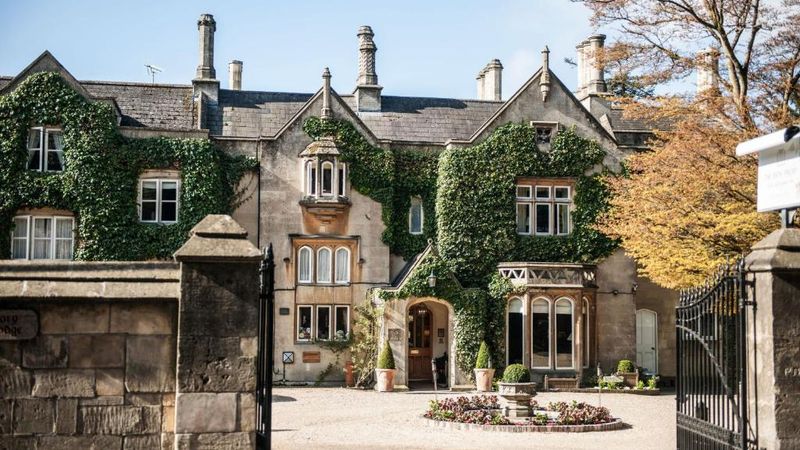
The Bath Priory
Spa weekends, garden stays, drivers, special occasions and families who need larger suite configurations.
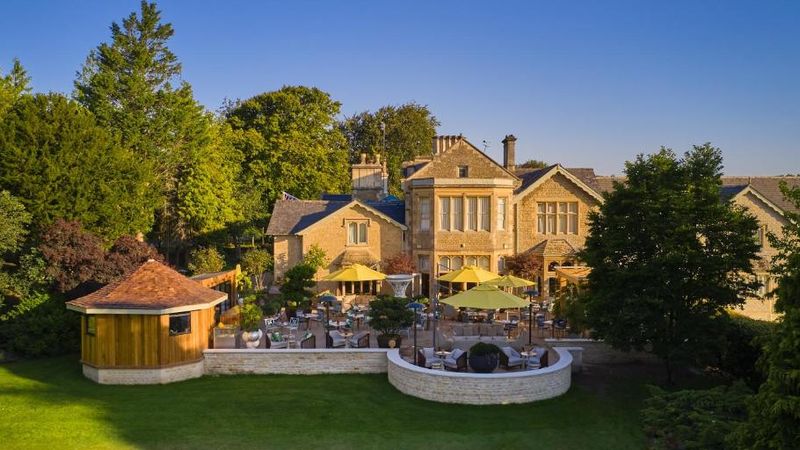
Homewood
Couples, spa breaks, drivers, families and dog owners who want countryside space around the stay.
The three choices that decide most Bath stays
Bath is compact, but it is not flat and its hotels are not interchangeable. The useful question is not simply how far a pin sits from the Roman Baths. It is whether the last walk is uphill, whether a car creates more work than it solves, and whether the hotel or the city is meant to fill the weekend.
Central Bath or Upper Town?
Choose central Bath for a first visit, a short rail break or an itinerary built around the Roman Baths, Bath Abbey and Thermae Bath Spa. The station, bus station and principal sights are concentrated in the same part of the city, so the arrival and most daytime journeys can stay on foot. The trade-off is a busier streetscape, limited hotel parking and more exposure to restaurants, events and servicing.
Choose Upper Town and the Royal Crescent when Georgian architecture and a calmer evening setting matter more than the quickest station arrival. The Royal Crescent, The Circus and independent businesses around the upper city make the neighbourhood part of the experience. The cost is the hill: plan the return as seriously as the outward sightseeing walk, particularly with luggage, in wet weather or with limited stamina.
Central Bath or Bathwick?
Choose central Bath when every hour counts and the trip is led by headline attractions. Choose Bathwick when you want to cross Pulteney Bridge at the start and end of the day, stay among the grand proportions of Great Pulteney Street and put the Holburne Museum, Sydney Gardens or canal walks into the plan.
Bathwick is not a remote alternative; it is a different rhythm just across the river. Its two hotel examples also make the choice concrete. No.15 is an individual Georgian townhouse hotel with a treatment spa but no wet facilities, while The Bird is a bolder, more informal stay that advertises parking. Confirm the exact building, room route and parking terms rather than buying the neighbourhood mood alone.
City hotel or countryside retreat?
Stay in the city when Bath itself is the main attraction. A one- or two-night visit usually benefits more from a central room than from facilities that consume travel time at either end of the day.
Choose The Bath Priory or Homewood only when the hotel is meant to take a large share of the break. The Bath Priory keeps a city address but sits beyond the easiest sightseeing core; Homewood is a countryside hotel near Freshford, not a walk-out Bath base. Both can work well for drivers, gardens and spa time, but dinner transport, taxis and the departure-day plan belong in the cost comparison.
Match the area to the trip
A one-night culture or spa break
Keep the logistics simple and stay centrally. The Gainsborough is the relevant example when natural thermal-water access at the hotel is the defining experience. That is a different product from booking Thermae Bath Spa separately or choosing a hotel with a conventional pool. Abbey Hotel and Hotel Indigo suit travellers who prioritise position and individual design without paying for a hotel spa they may not use.
A two-night Georgian weekend
Upper Town creates the strongest sense of place. The Royal Crescent Hotel turns the landmark address, gardens and spa into the occasion; The Queensberry offers a smaller independent townhouse stay with a serious restaurant. Build the hill into the plan, then decide whether a taxi for arrival or an evening return is a sensible part of the budget.
A family stay
Start with the room, not the neighbourhood. Apex is the clearest central example here because its official information covers family rooms, a heated indoor pool and access provisions. Pool use requires a booked slot, so it should be confirmed as part of the plan rather than assumed on arrival. Other Bath hotels publish family rooms, suites, cots or extra beds, but the legal occupancy, bed for each child and spa or pool age rule must be checked for the named category.
A driving trip
Do not assume a hotel needs a car simply because you arrive in one. Visit Bath currently recommends Park & Ride to avoid city-centre congestion, and the three services approach from different sides of Bath. If the car remains essential, treat parking as a bookable facility: confirm whether the space is on site, reserved, charged, height-restricted and available throughout the stay.
Bath’s Clean Air Zone covers the city centre, but the council states that private cars and motorbikes are not charged. Commercial vehicles, taxis, private-hire vehicles, some motorhomes and other vehicle categories may be treated differently, so use the official checker for the actual registration rather than relying on a general summary.
Spa labels do not mean the same thing
Bath’s name makes vague spa marketing especially unhelpful. Separate these four products before comparing rates:
- Natural thermal water at the hotel. The Gainsborough publishes a thermal Bath House for residents and selected accommodation with thermal-water access. Check the current resident hours and room inclusions.
- A conventional hotel pool and leisure facilities. Apex publishes a heated indoor pool, sauna, steam room and gym. This is useful for families and general leisure time, but it is not Bath’s natural thermal water.
- A pool-led hotel spa. The Royal Crescent, Bath Priory and Homewood publish different combinations of pools, heat facilities and treatments. Resident access, child hours and booking rules vary.
- A treatment spa without wet facilities. No.15 explicitly sits in this category. It can suit a treatment-focused break but not someone expecting a swimming pool or sauna.
Compare the exact rate, access window, age rules and treatment requirement. “Spa hotel” alone does not say what will be available after check-in.
Arrival, hills and access change the answer
Bath Spa railway station and Bath Bus Station are in the centre, which makes the Abbey Quarter, South Parade and Westgate the easiest starting points for many car-free visitors. That convenience ends at the hotel threshold. Historic paving, kerbs, entrance steps, split levels and converted townhouses can still make a short route difficult.
Upper Town is the clearest case where distance understates effort. A taxi may turn a demanding luggage arrival into a simple one, but the hotel still needs to confirm the drop-off, entrance, lift, bedroom floor and bathroom. Bathwick is gentler for many central journeys but includes its own gradients and historic-building complications. A countryside hotel adds grounds, outdoor surfaces and dependence on a vehicle.
This guide is not an access audit. Ask for the complete route from arrival point to reception, lift, bedroom, bathroom, restaurant, spa and emergency exit. Request measurements and photographs when a particular transfer, door width or shower arrangement is essential.
Common Bath area mistakes
Assuming every central hotel is beside the station
Bath’s centre is compact, but a route with luggage can feel different from a sightseeing walk. Plot the named entrance, not just the postcode, and check whether reception sits in the main building or an adjoining townhouse.
Booking the postcode instead of the room
Georgian hotels often contain rooms with different floors, outlooks, stairs, ceiling heights and bathrooms. A Royal Crescent or Great Pulteney Street address does not guarantee a landmark view. Keep the room category and any promised feature in writing.
Treating parking as free or guaranteed
Some central hotels have no parking, while others use limited, charged or off-site spaces. A parking symbol does not answer whether a large vehicle fits, whether the space can be reserved or whether the car can remain after check-out.
Choosing a rural hotel for a sightseeing-heavy break
Grounds and spa facilities add value only when there is time to use them. Price the taxi or driving plan for every city visit and evening meal. If the itinerary spends most waking hours in central Bath, the retreat may create more travel than relaxation.
A practical booking sequence
- Choose the trip anchor. Decide whether it is the Roman Baths, thermal bathing, Georgian architecture, a restaurant, family pool time or the hotel itself.
- Pick two viable bases. Compare central Bath with one alternative that solves a real need—quiet, parking, design or grounds.
- Map the arrival and final evening. Include luggage, hills, paving, station or Park & Ride stop, and the return after dinner.
- Compare exact rooms. Check occupancy, bed, floor, lift route, bathroom, outlook, air-conditioning and cancellation terms.
- Verify the facility that justifies the rate. Confirm spa access, pool slot, parking space, restaurant table or family configuration before paying.
- Check the full price. Include breakfast, mandatory charges, extra beds, parking, spa access and transport into the centre.
- Keep the confirmation. A request is not a guarantee unless the hotel accepts it as part of the booking.
Other Bath planning
Use the main Bath hotel guide when the area is settled and you want the ten hotels compared by their strongest reason to book. For live transport, parking and event conditions, return to the official visitor and council sources listed below rather than relying on a fixed journey time in an editorial guide.
Choose your Bath base
If you are visiting Bath for the first time without a car
Choose central Bath. Abbey Hotel and Hotel Indigo are practical for rail arrivals; The Gainsborough makes sense when natural thermal bathing is central to the trip.
If you want the strongest Georgian sense of place
Choose Upper Town. The Royal Crescent Hotel has the landmark address and garden spa; The Queensberry is the smaller independent option near The Circus.
If you want a design-led couples’ stay
Start in Bathwick. No.15 offers an individual townhouse stay with a treatment spa, while The Bird is the more playful hotel with parking advertised on site.
If you are travelling with children and want an indoor pool
Apex is the clearest central starting point because it publishes family rooms and a bookable indoor pool. Confirm the exact occupancy, beds and swim slot before paying.
If you are driving and want the hotel to anchor the weekend
Compare The Bath Priory for gardens and spa time on Bath’s western edge with Homewood for a fully rural retreat. Do not choose either for instant access to the Abbey Quarter.
If you need a straightforward station arrival with luggage
Stay in the Abbey Quarter or on South Parade. Check paving, thresholds and lift coverage for the exact room; “central” does not guarantee a step-free route.
If you want natural thermal-water access at the hotel
The Gainsborough is the relevant example in this guide. Its resident bathing arrangements and selected thermal-water room categories are different from a conventional pool or treatment spa.
If you care most about destination dining in a smaller hotel
The Queensberry combines an independent Upper Town stay with the Olive Tree restaurant. Verify opening days, table availability and what the booked rate includes.
Keep planning
More Bath planning
Curated guide
Country House Hotels Near Bath
Country house hotels near Bath and Bristol compared: spa estates, dog-friendly inns, drive times into Bath, parking and food. Check latest prices.
Place guide
Bath Christmas Market Hotels 2026
Bath Christmas Market hotels with parking angles compared: chalets, spas, station picks and retreats. See rooms and latest prices via Stay22.
Place guide
Country House Hotels near Bath and the Roman Baths
Compare 10 country house hotels near Bath by Roman Baths access, spa, food, family facilities, parking and whether the countryside is worth the transfer.
Related planning
Related guides in this cluster
Continue with these destination and place guides.
Quick answers
Common questions about where to stay in Bath
Concise answers for choosing a base, planning transport and matching the stay to your trip.
What is the best area to stay in Bath for a first visit?
Central Bath around the Abbey Quarter, SouthGate and Westgate is the strongest all-round answer. Bath Spa station, the Roman Baths, Bath Abbey, Thermae Bath Spa, shops and restaurants are concentrated here. Upper Town is more atmospheric for Georgian architecture, but the uphill return makes it less effortless with luggage or limited mobility.
Where should I stay in Bath without a car?
Choose central Bath or Bathwick. The centre is simplest for Bath Spa station and the major sights; Bathwick remains walkable across the river while feeling less busy. Upper Town also works without a car if the hill is comfortable. A countryside hotel needs a planned taxi, car or local rail connection.
Which part of Bath is quietest?
The western edge, countryside and many Upper Town streets are stronger quiet-base candidates than the Abbey Quarter. Bathwick can also feel calmer than the centre. No area guarantees a silent room: ask about the façade, events, restaurant, lifts, service areas and any nearby works for the actual dates.
Where should couples stay in Bath?
Upper Town suits a landmark Georgian occasion; Bathwick suits a design-led weekend around Great Pulteney Street and the Holburne Museum; central Bath is best when spa time and sightseeing must fit into a short break. Choose the experience first, then compare the exact room and inclusions.
Where should families stay in Bath?
Central Bath reduces daily walking, and Apex is a useful example because it publishes family rooms and an indoor pool. The Royal Crescent, Gainsborough, Bath Priory, No.15 and Homewood have different family or suite arrangements. Confirm every guest’s age, legal occupancy, bed, cot and pool or spa access before booking.
Should I stay in Bath city centre or the countryside?
Choose the centre for a one- or two-night sightseeing trip, especially by rail. Choose the countryside when the hotel’s gardens, pool, spa and restaurant are a main part of the break and you accept planned transport into Bath. Compare the full stay, including taxis or parking, rather than the room rate alone.
Is it worth paying for a hotel with parking in Bath?
It can be when driving is unavoidable or the hotel is outside the centre. For a short central break, rail or Park & Ride may remove more friction than hotel parking. Confirm whether a space is on site, reservable, charged, accessible throughout the stay and suitable for the vehicle; do not rely on a generic parking icon.
Methodology
This guide compares four broad bases that create meaningfully different Bath stays. Bath is compact, so boundaries overlap and the precise street, slope and building can matter more than the neighbourhood label. The ten hotel examples are existing researched entries used to show the range within each base, not a second ranked best-hotels list. We checked current official tourism, council, heritage and hotel sources on 22 September 2026. We did not stay in, inspect or sound-test the hotels, and we did not audit every pavement or step-free route. Recheck transport, parking, events, building access and the exact room before travel.
Site-wide method: how we review hotels · editorial policy

Editorial evidenceSources18 cited references supporting this page
Claims are paired with the publisher and access date used during editorial verification.
Compact city-centre, Bath Spa and bus-station location, walkability and surrounding transport choices
City-centre, parking, parks and area-map context used to define the four practical bases
Upper City position beside The Circus and Royal Crescent, plus independent shopping context
Bathwick position, slower neighbourhood context, Holburne Museum, parks, canal and hill considerations
Great Pulteney Street, Pulteney Bridge, Holburne Museum and Sydney Gardens orientation
Three Park & Ride services, current operating pattern and accessible-bus context
Bath Clean Air Zone scope and the exemption for private cars and motorbikes
Roman thermal spa, Georgian town planning and landscape significance
Central location, thermal-spa positioning and address for The Gainsborough Bath Spa
Central North Parade position and boutique-hotel identity for Abbey Hotel Bath
Central listed-building setting and individual room styles for Hotel Indigo Bath
Central position, indoor pool, family rooms, access information and lack of hotel parking at Apex City of Bath Hotel
Royal Crescent address, accommodation, gardens and spa positioning
Independent Upper Town townhouse identity and Olive Tree restaurant
Great Pulteney Street setting, individual bedrooms and treatment-spa positioning
Bathwick position, design-led identity, dining and advertised parking for The Bird, Bath
Weston Road setting, gardens and spa positioning for The Bath Priory
Freshford countryside setting, spa positioning and retreat identity for Homewood